
Interactive election analysis
Maps, models and trackers from Patrick Ruffini's newsletter, The Intersection, built on voter files, precinct returns and every public House and Senate poll.
The Autopsy
Post-election maps of where the 2026 vote moved and who turned out.
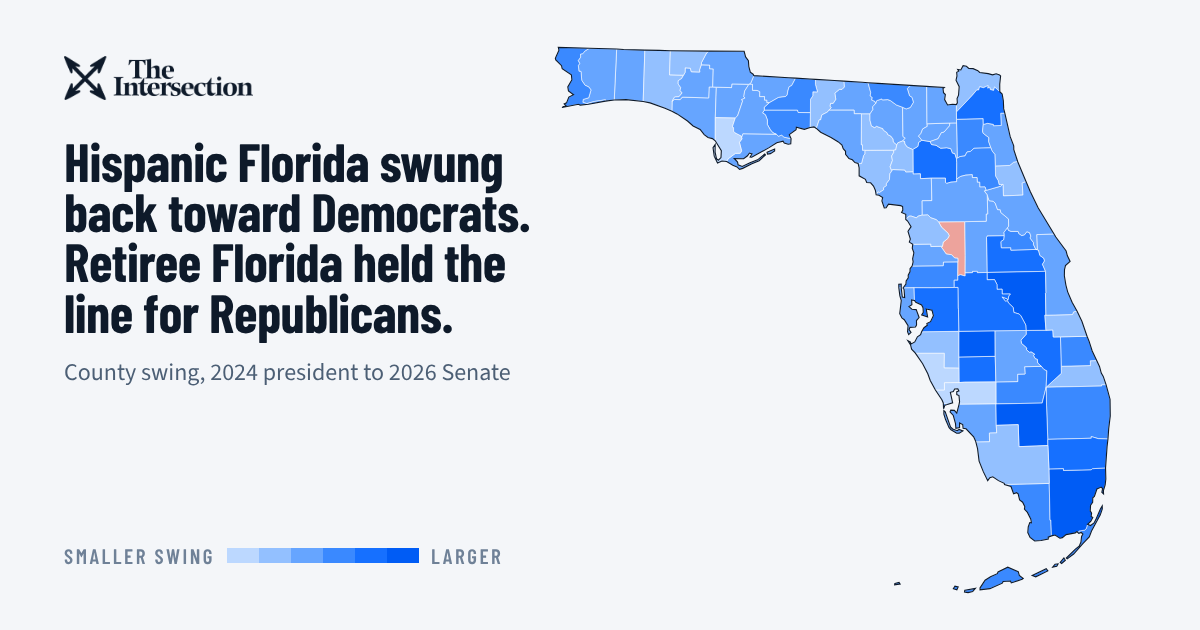
Hispanic Florida swung back toward Democrats. Retiree Florida held the line for Republicans.
Moody and Donalds held on by 3 and 1 points; Miami-Dade flipped while The Villages moved right.
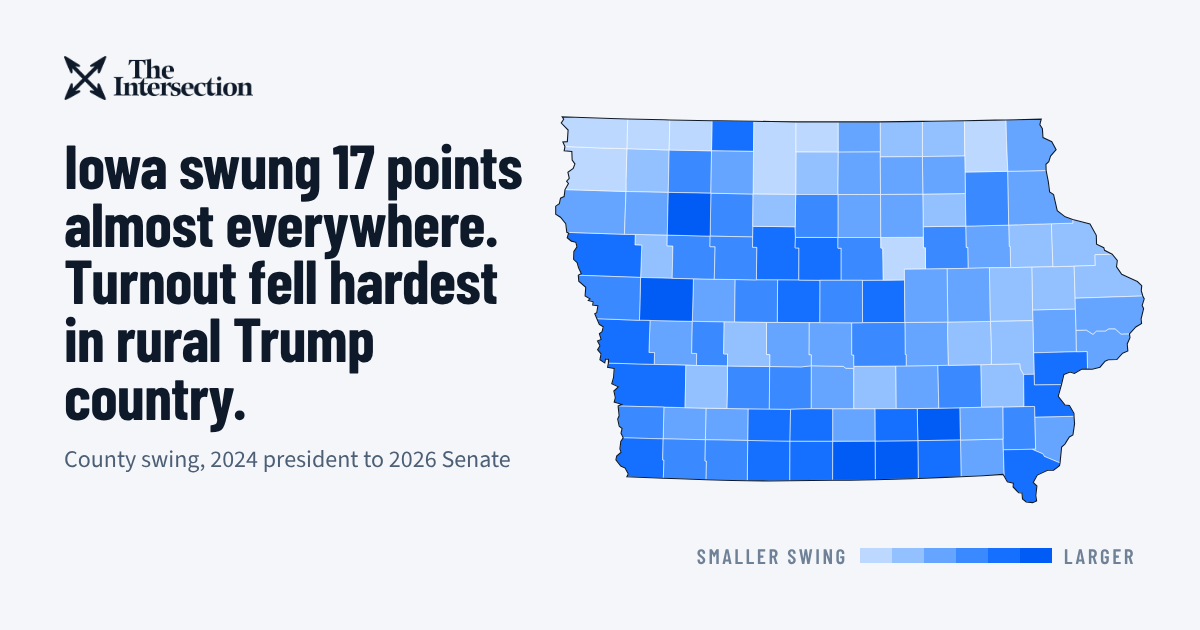
Iowa swung 17 points almost everywhere. Turnout fell hardest in rural Trump country.
Turek and Sand won on a near-uniform swing, while Trump+40 counties cast 77% of their 2024 vote.
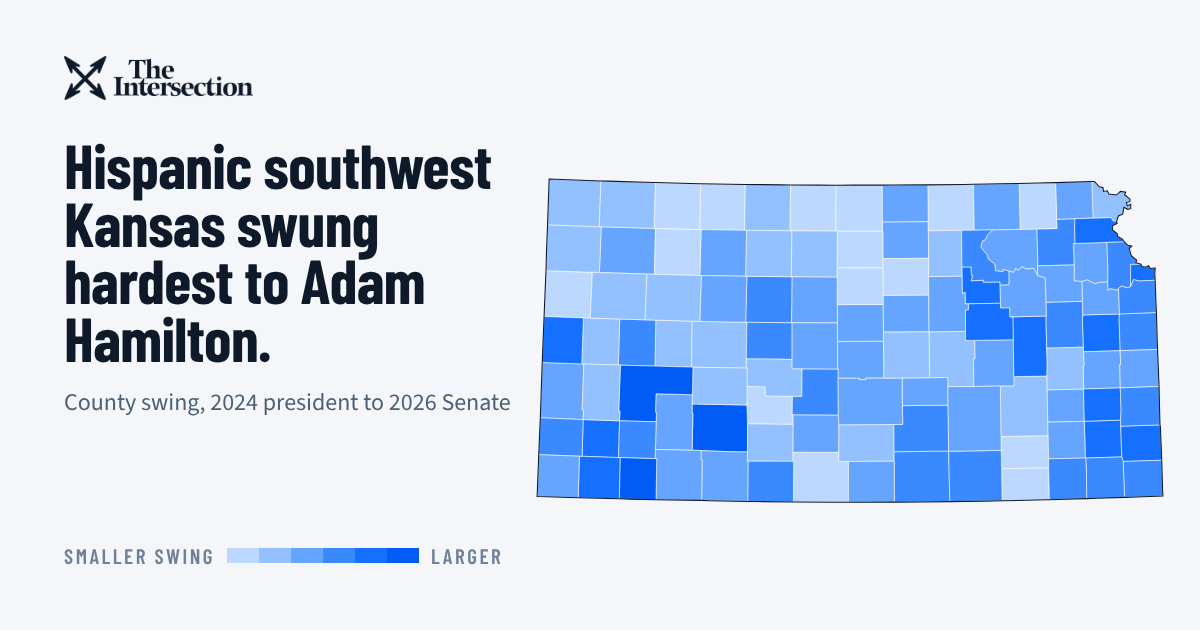
Hispanic southwest Kansas swung hardest to Adam Hamilton.
Hamilton unseated Marshall on a 21-point swing; the governor’s race is too close to call.
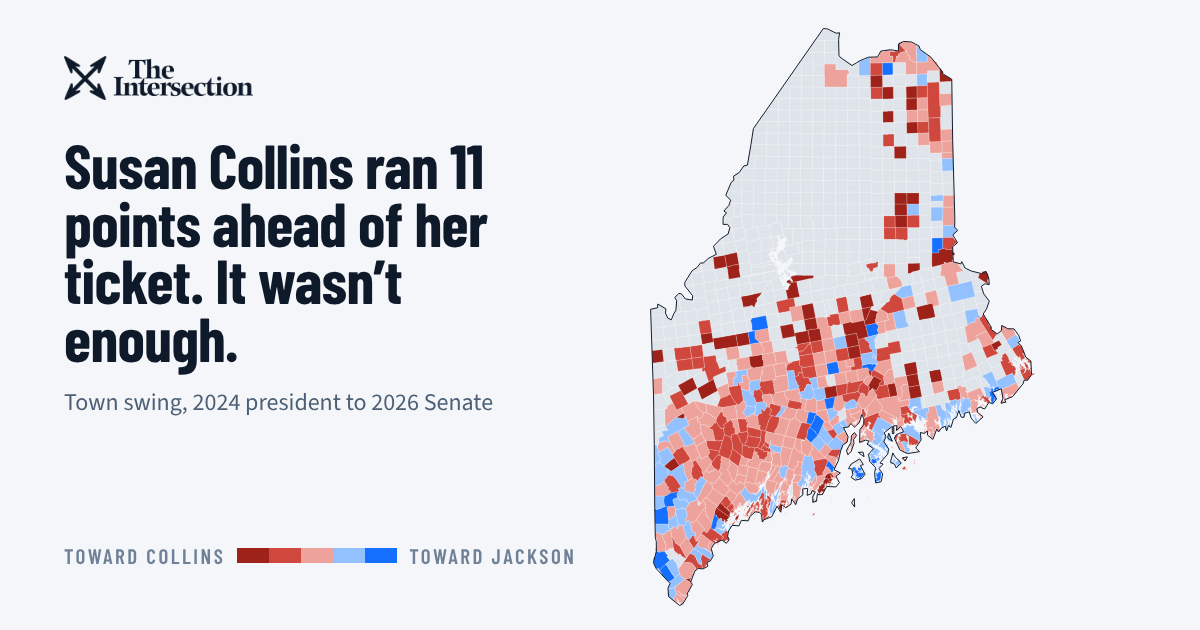
Susan Collins ran 11 points ahead of her ticket. It wasn’t enough.
Jackson matched Harris’s margin while Pingree won by 17; three in four towns moved toward Collins.
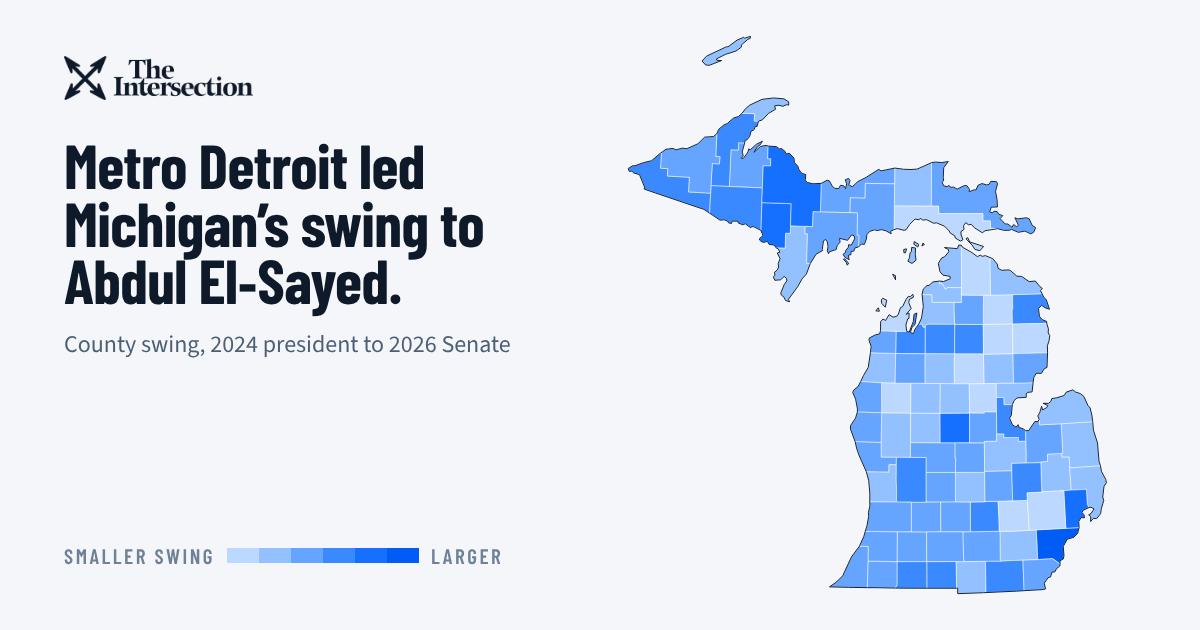
Metro Detroit led Michigan’s swing to Abdul El-Sayed.
Wayne swung 14 points and Macomb 12; college counties held their turnout.
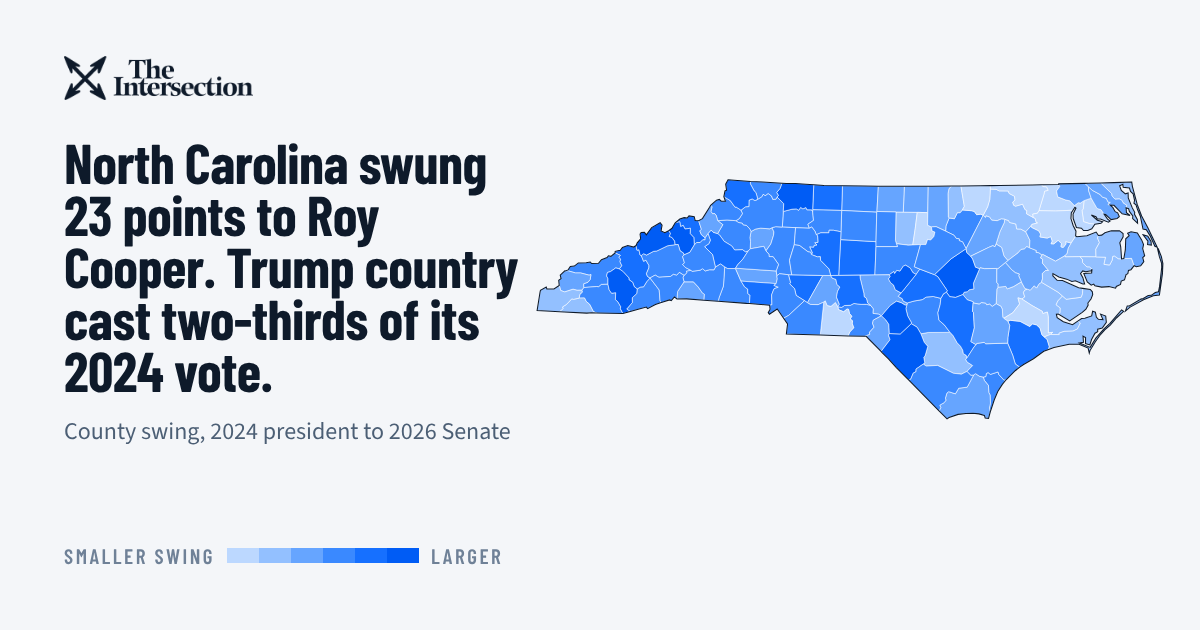
North Carolina swung 23 points to Roy Cooper. Trump country cast two-thirds of its 2024 vote.
A near-uniform swing; deep-red counties cast 67% of their 2024 vote.
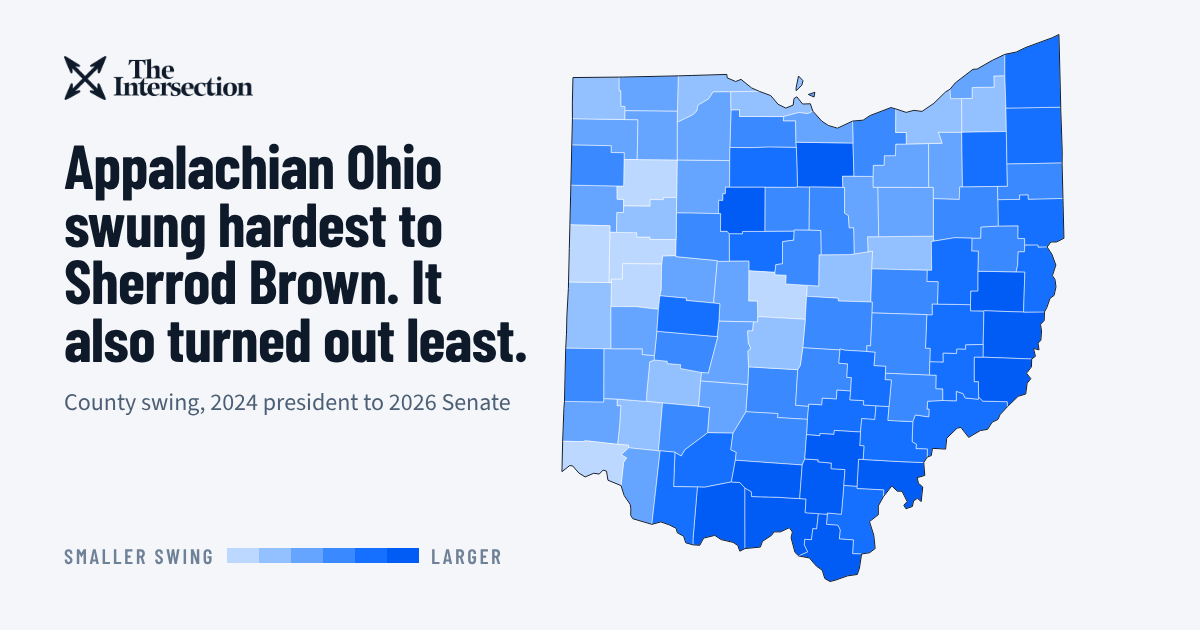
Appalachian Ohio swung hardest to Sherrod Brown. It also turned out least.
Southern Appalachian counties swung 21 to 22 points and cast under 70% of their 2024 vote.
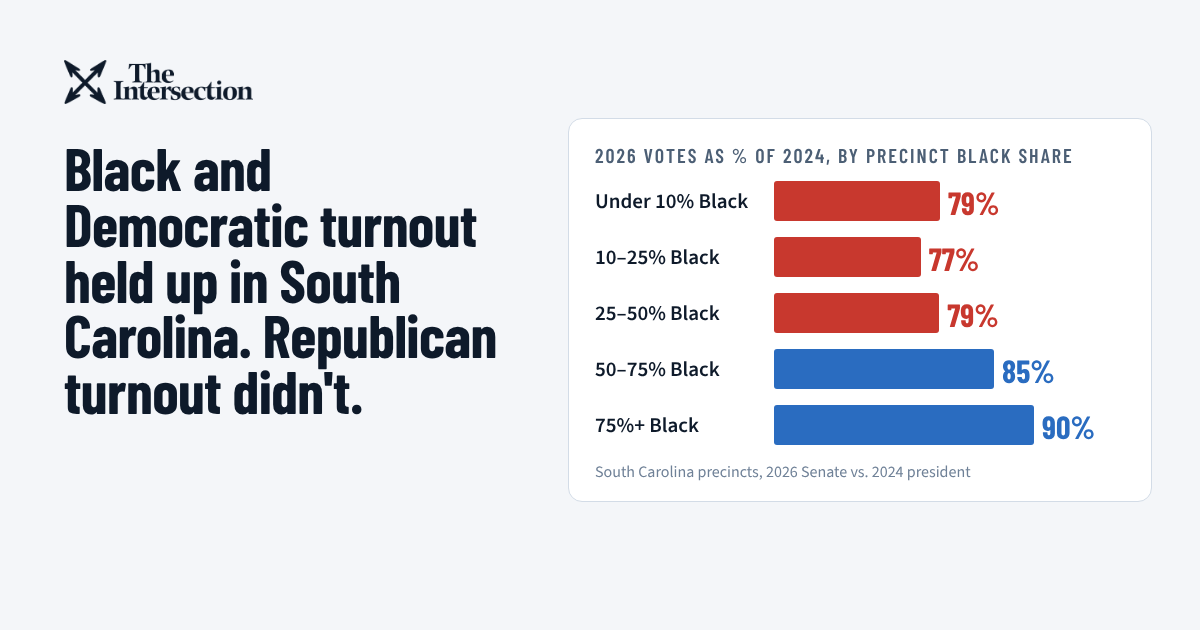
Black and Democratic turnout held up in South Carolina. Republican turnout didn't.
Heavily Black precincts cast 90% of their 2024 vote; deep-red precincts about 70%.
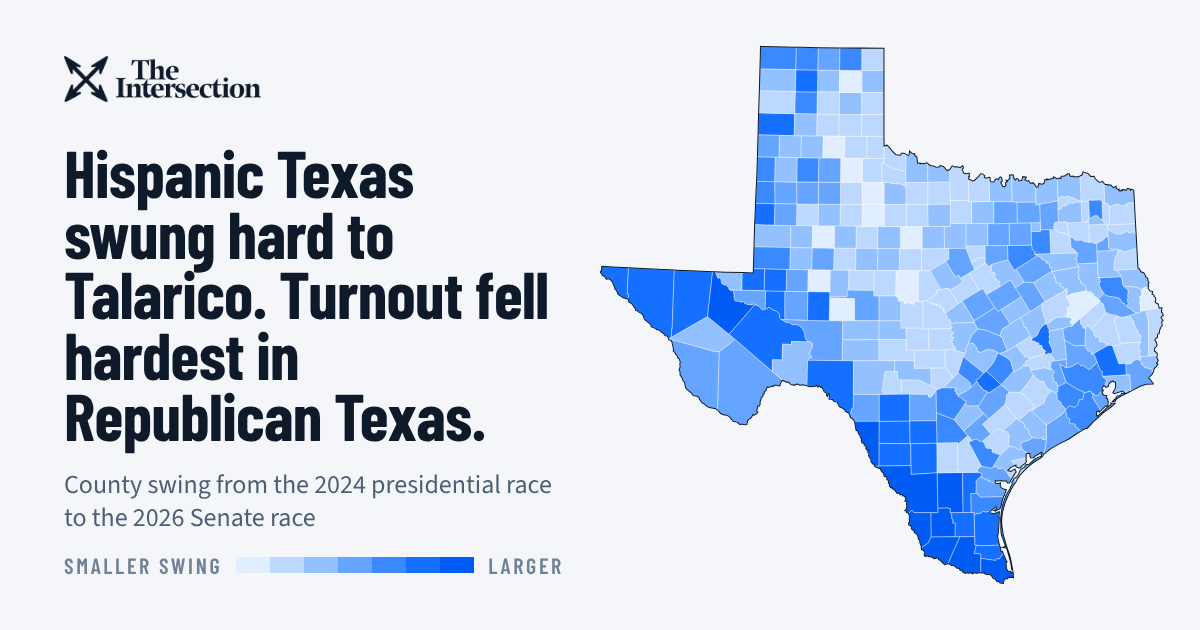
Hispanic Texas swung hard to Talarico. Turnout fell hardest in Republican Texas.
The most Hispanic counties swung 43 points from 2024, while deep-red counties cast just 80% of their 2024 vote.
2026 Midterms
Interactive tools for the House and Senate.
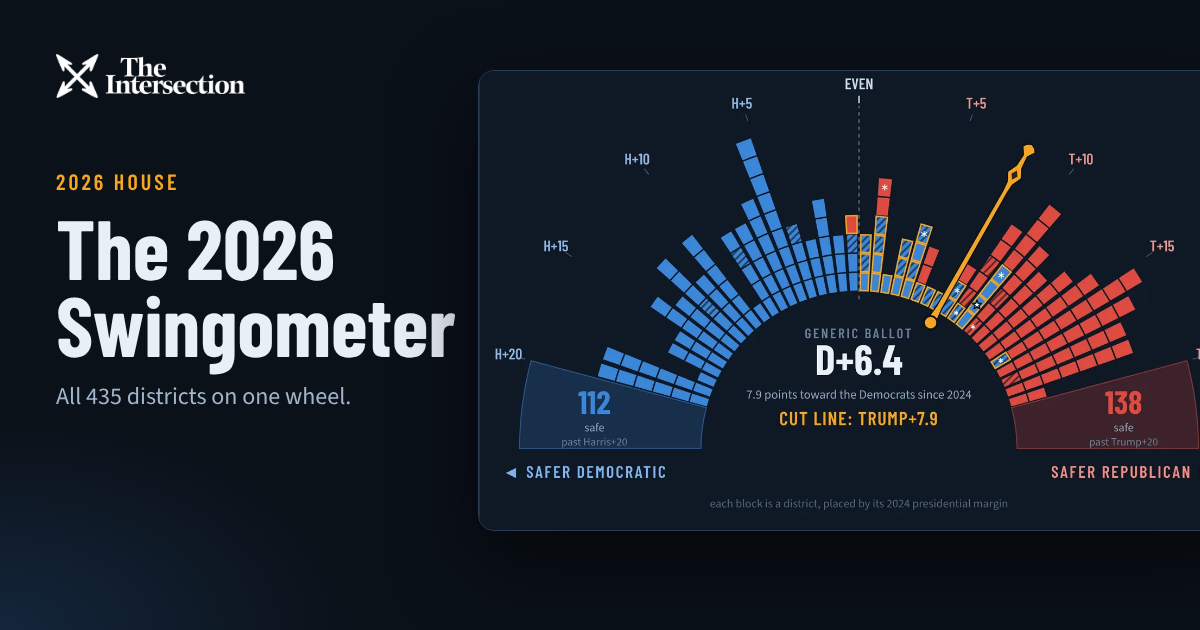 Live version for subscribers
The 2026 Swingometer
All 435 House districts on one wheel. Move the generic ballot and see which seats flip.
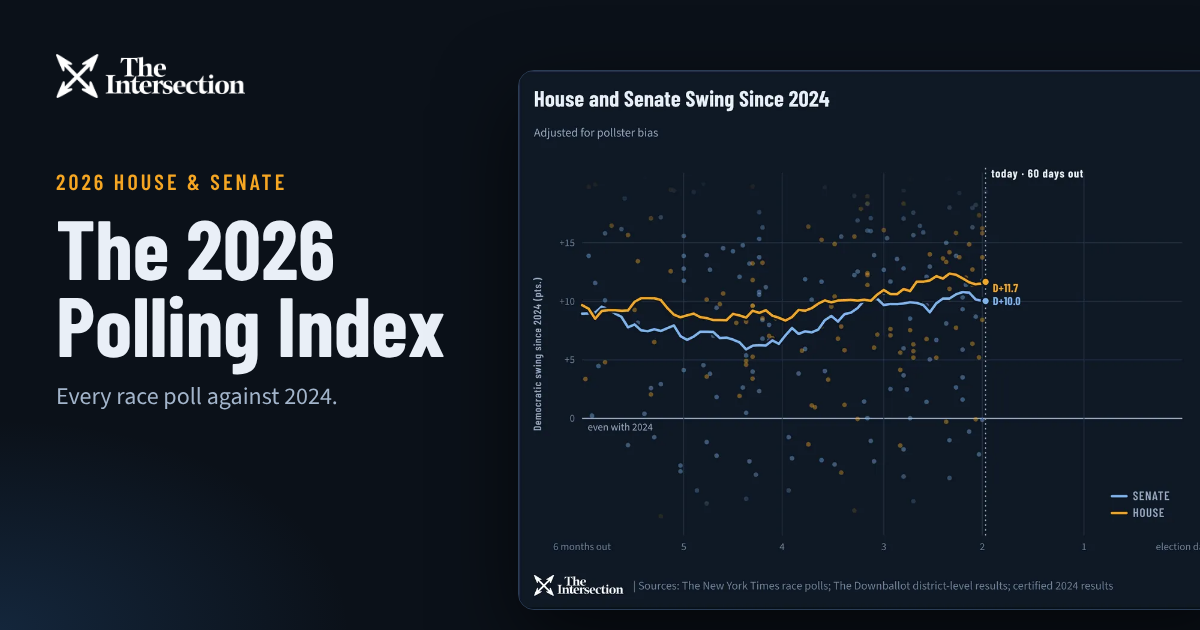 Live version for subscribers
The 2026 Polling Index
Every House and Senate race poll, measured against 2024 and adjusted for pollster bias.
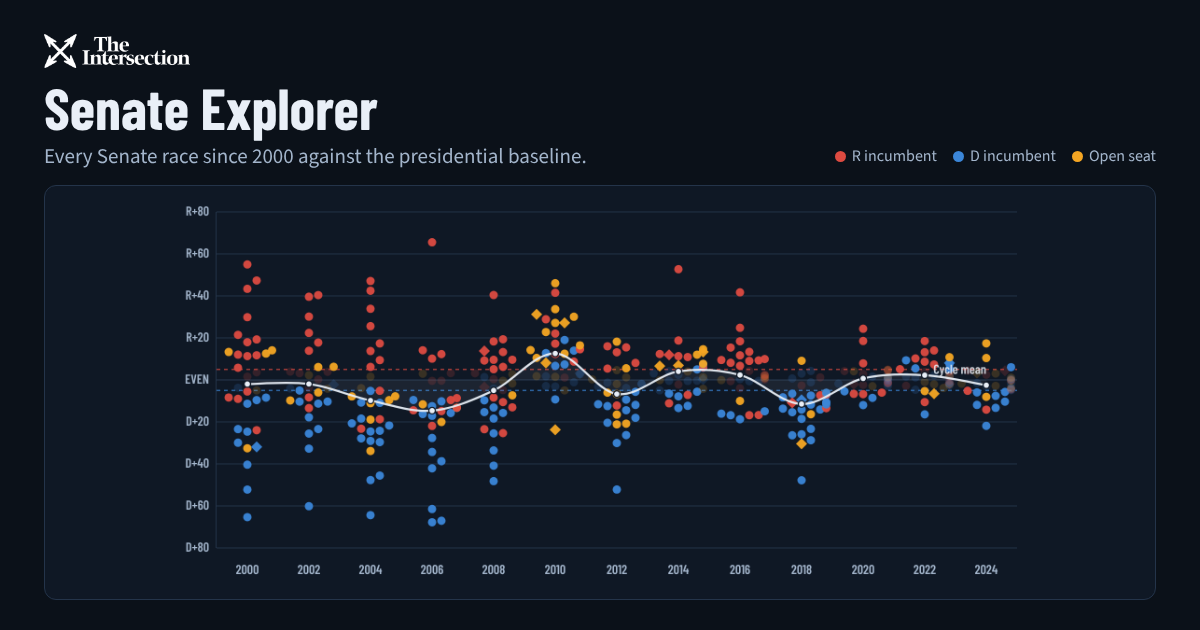
Senate Explorer
Every Senate race since 2000 against the presidential baseline, plus a 2026 seat simulator.
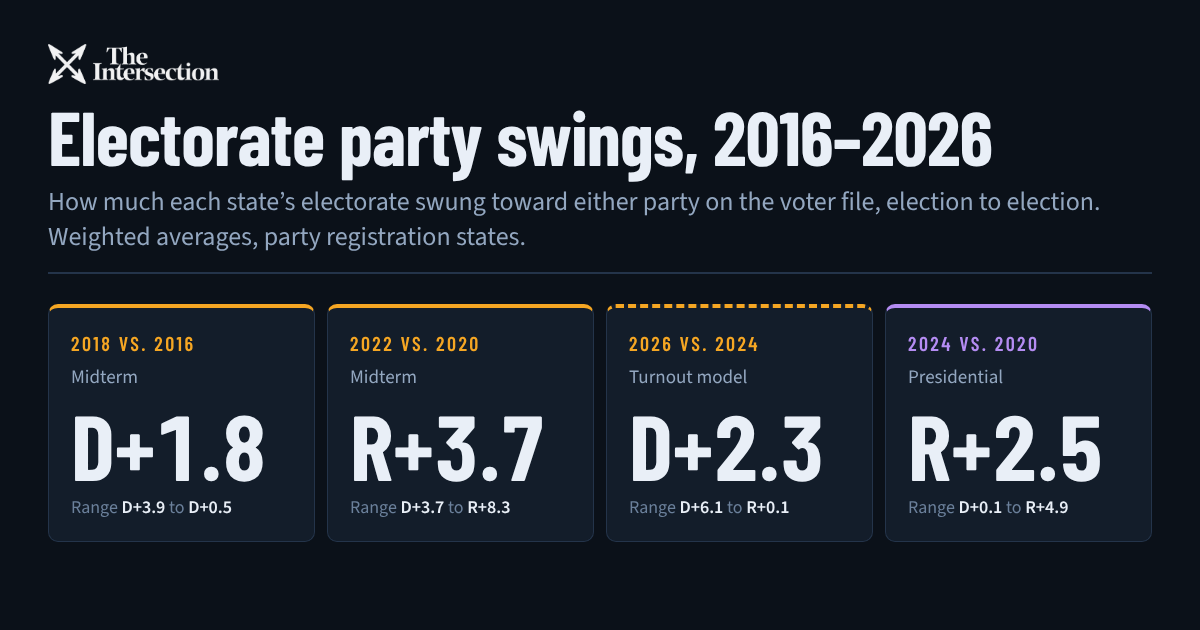
Electorate party swings
How much each state’s electorate swung toward either party on the voter file from one election to the next, and what the 2026 turnout model expects.
Primary analysis
Who crossed over, who turned out, and where, from the voter file and precinct returns.
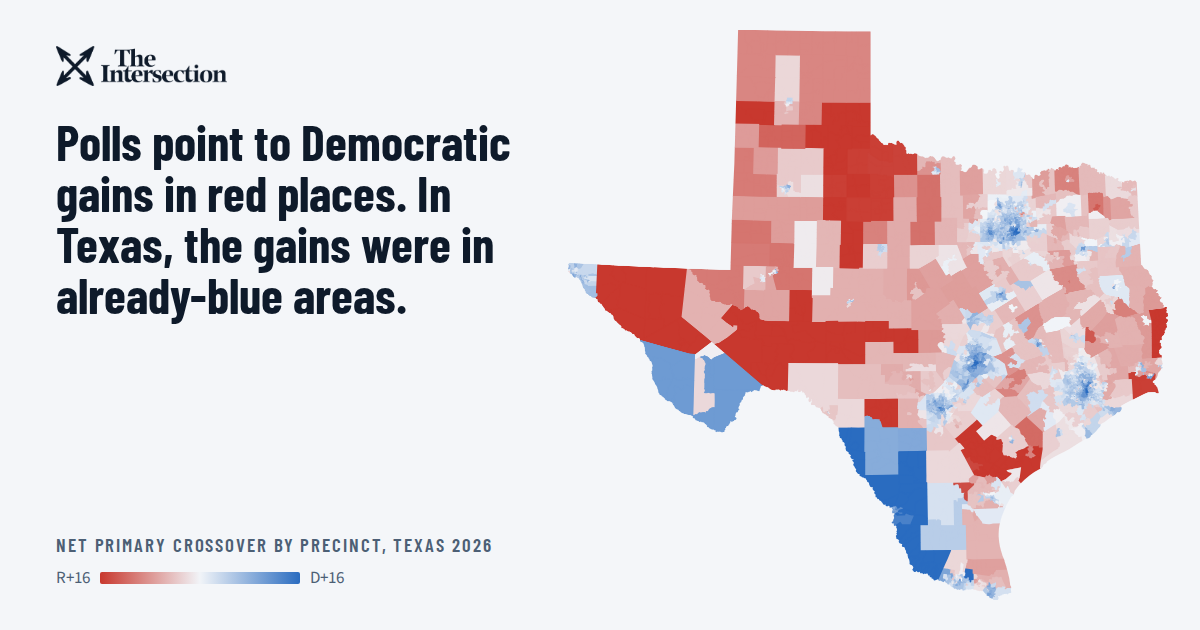
Polls point to Democratic gains in red places. In Texas, the gains were in already-blue areas.
113,615 Republican-history Texans voted in the Democratic primary, mostly in blue, urban precincts.
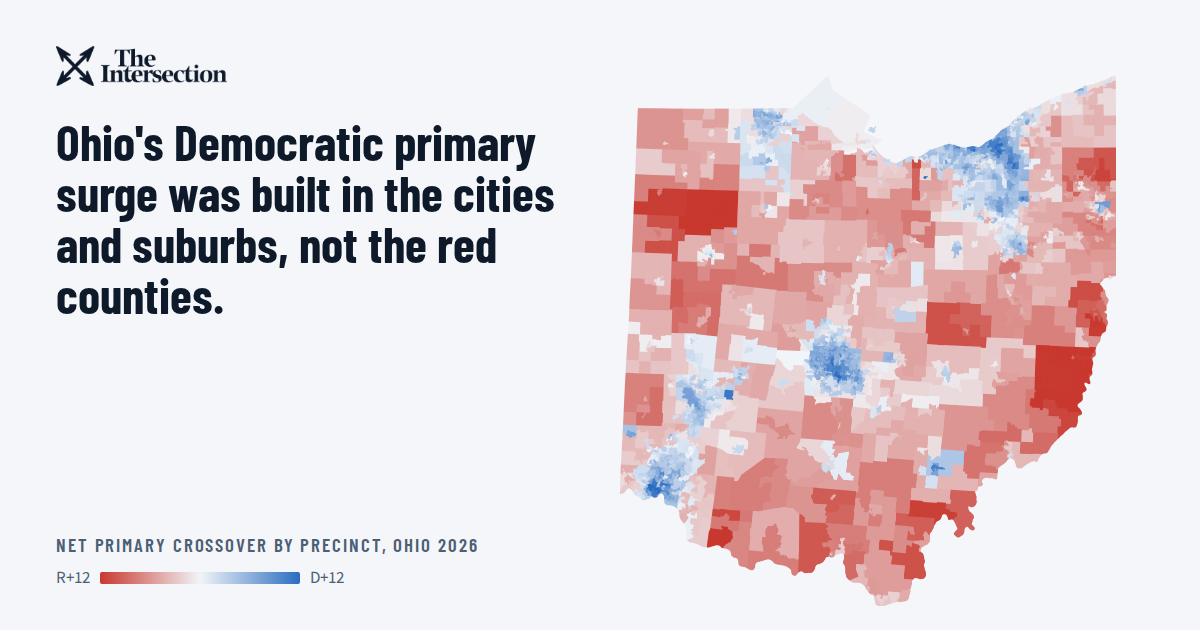
Ohio's Democratic primary surge was built in the cities and suburbs, not the red counties.
The Democratic share of primary ballots rose from 33% to 47%, led by cities and suburbs.
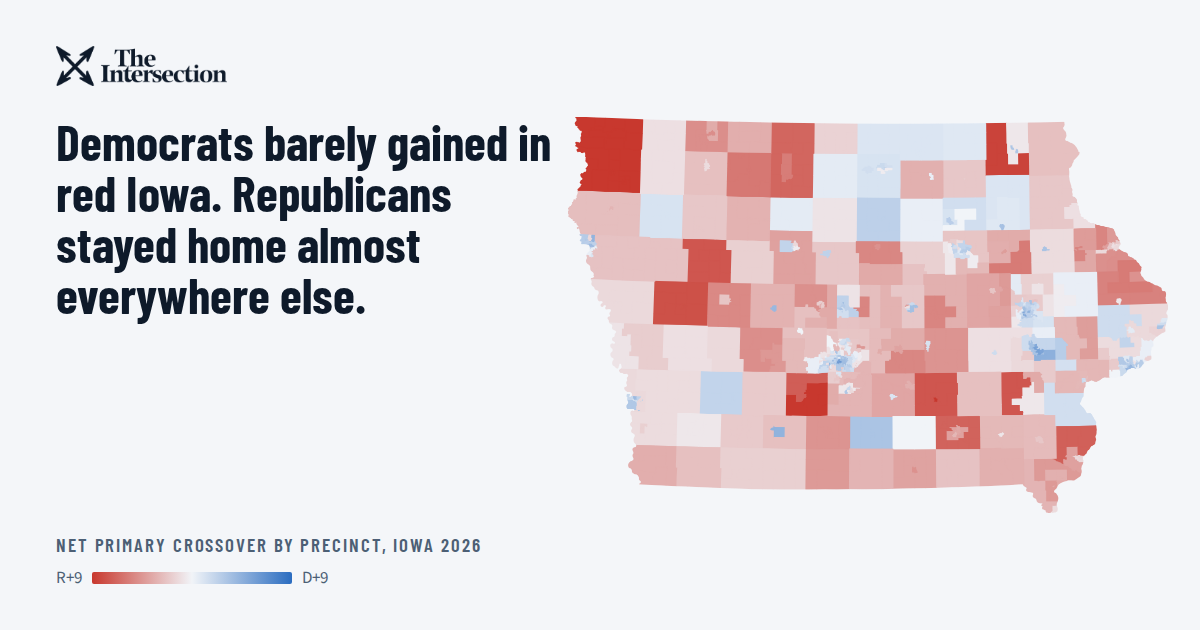
Democrats gained ground in Iowa through turnout, not crossovers or new voters
Iowa's primary moved toward Democrats mainly because 2022 Republican primary voters stayed home.